

Updated: 17-Mar-2020
It was "Kinner Motors Inc." of Glendale, CA. In 1919 Winfield Bert Kinner had begun to build engines and airplanes.
-The engines were based on the three-cylinder Lawrance radial. He already tested a similar engine in 1921.
-Later, around 1939, he would absorb the “Kinner Airplane and Motor Company” that he had founded in 1927.
-In the end Kinner would be a part of Gladden Products Corp. when acquired by the latter.
-The best known and most built engine by the brand was the 5-cylinder radial.
-In 1925 he made a three-cylinder radial that gave 65 hp. He later made the B-4 that was exported to Canada in large amounts.
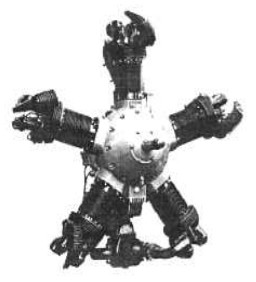
“Kinner B-5”
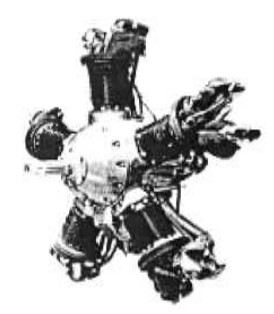
“Kinner B-54”
-The B-5 of the year 1930, gave 125 hp had a derivative that was the B-54. It had a displacement of 372 cu. in. It was also known as R-440, official reference.
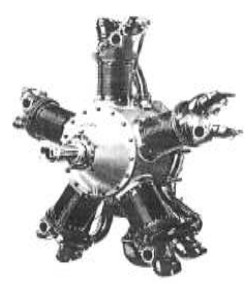
“Kinner C-5”
-It looked like the previous one but with a larger size, it gave 210 hp.
-The C-7 was from the year 1934, and was derived from the C-5. It gave 300 hp with 7 cylinders. The SC-7 delivered 350 hp.
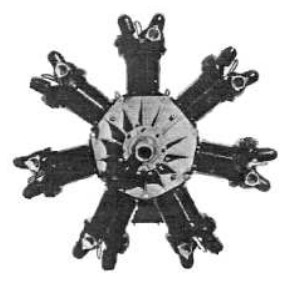
“Kinner C-7”
- By 1927 he built the B-5, C-5, C-7, K-2, K-5 and R-5.
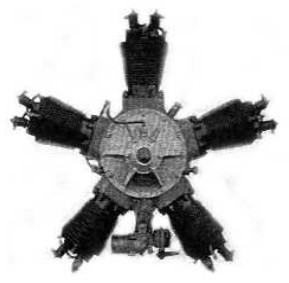
“Kinner K-2”
-The Kinner K-2 gave 100 hp at 1,800 rpm.
-The next one was the K-3 that gave 100 hp at 1,810 rpm as well. It had the power similar to the K-2 but with structural improvements.
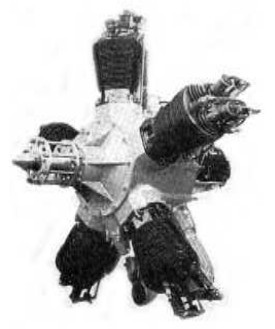
“Kinner K-3”
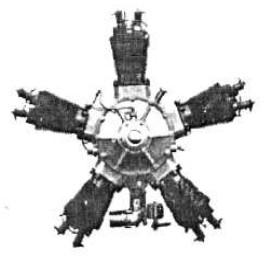
“Kinner K-5”
-The K-5 gave 100 hp with 372 cu. in. of displacement.
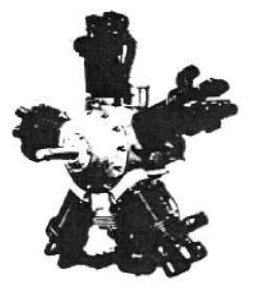
“Otro Kinner K-5”
-There was the K-5 with 110/118 hp, very based - as they say - on the Shvetsov M-1.
-The R-5 and its R-55 (R-540) super version gave 160 hp with a displacement of 540 cu. in. The R-5 is basically a B-5, varying the oil passages that are inside the crankcase.
-The R-53 of the same displacement gave 175 hp. However the R-56 gave 160 hp again.
-The R-5 had 5 radial cylinders like the previous ones, and gave 160 hp at 1,975 rpm. It was an enhanced version of the B-5.
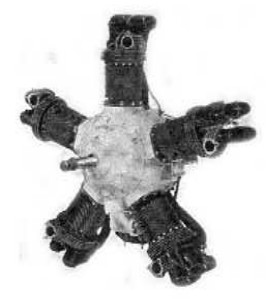
“Kinner R-5”
-The R-56 gave 160 hp again.
-The R-53 was similar to the R-55 with a slight increase in compression.
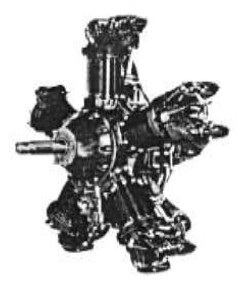
“Kinner R-56”
-All these engines had their official specification as R-440-1, -3 .. or R-455, R-540-1, -3 ... or R-715-1 ...
-The R-56 has the same configuration as the previous R-52, giving 160 hp.
-The R-715 with 5 cylinders reached 190 hp at 1,800 rpm.
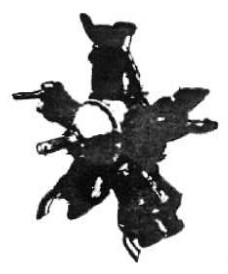
“R-715”
-The Kinner SC-7 is actually an improved C-7 with a General Electric supercharger. The impeller rotates 9.7 times more than the crankshaft. This in addition to other improvements.
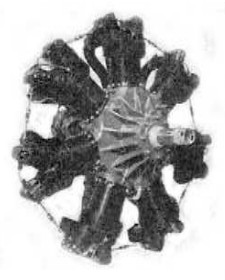
“Kinner SC-7”
-And now a new Kinner, the GC-14. In fact, in 1939 Kinner presented two double row radials with fourteen cylinders: the one mentioned had 1,830 cubic inches of displacement (R-1830) giving 840 hp at 2,450 rpm.
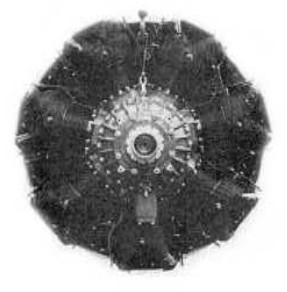
“Kinner, GC-14”
-The other was older, the R-2230 that gave 1050 hp at 2,400 rpm.
-By 1944, Kinner made a series of horizontally-opposed 6-cylinder engines in two versions. The O-552-H had no gearbox and gave 225 hp at 2,400 rpm. The O-552-HG with gearbox gave 250 hp at 2,800 rpm. Both were built between 1944 and 1946.
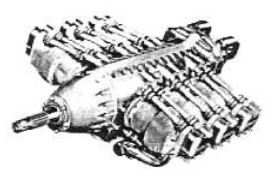
“Kinner O-552-HG”
Engines of KINNER
Model: 60 HP, radial
Arquitecture:
Cooling:
Total Displacement:
Bore / Stroke: x
Power:
Weight:
Model: B-5, -54
Arquitecture:
Cooling:
Total Displacement:
Bore / Stroke: x
Power:
Weight:
Model: C-5
Arquitecture:
Cooling:
Total Displacement:
Bore / Stroke: x
Power:
Weight:
Model: C-7, SC-7
Arquitecture:
Cooling:
Total Displacement:
Bore / Stroke: x
Power:
Weight:
Model: GC-14
Arquitecture:
Cooling:
Total Displacement:
Bore / Stroke: x
Power:
Weight:
Model: K-2
Arquitecture:
Cooling:
Total Displacement:
Bore / Stroke: x
Power:
Weight:
Model: K-3
Arquitecture:
Cooling:
Total Displacement:
Bore / Stroke: x
Power:
Weight:
Model: K-5
Arquitecture:
Cooling:
Total Displacement:
Bore / Stroke: x
Power:
Weight:
Model: O-550
Arquitecture:
Cooling:
Total Displacement:
Bore / Stroke: x
Power:
Weight:
Model: O-552
Arquitecture:
Cooling:
Total Displacement:
Bore / Stroke: x
Power:
Weight:
Model: R-2230
Arquitecture:
Cooling:
Total Displacement:
Bore / Stroke: x
Power:
Weight:
Model: R-440
Arquitecture:
Cooling:
Total Displacement:
Bore / Stroke: x
Power:
Weight:
Model: R-5
Arquitecture:
Cooling:
Total Displacement:
Bore / Stroke: x
Power:
Weight:
Model: R-53
Arquitecture:
Cooling:
Total Displacement:
Bore / Stroke: x
Power:
Weight:
Model: R-540
Arquitecture:
Cooling:
Total Displacement:
Bore / Stroke: x
Power:
Weight:
Model: R-55
Arquitecture:
Cooling:
Total Displacement:
Bore / Stroke: x
Power:
Weight:
Model: R-56
Arquitecture:
Cooling:
Total Displacement:
Bore / Stroke: x
Power:
Weight:
Model: R-715
Arquitecture:
Cooling:
Total Displacement:
Bore / Stroke: x
Power:
Weight:
Model: SC-7
Arquitecture:
Cooling:
Total Displacement:
Bore / Stroke: x
Power:
Weight: