

Updated: 23-Oct-2026
See De Palma
In the De Palma chapter, it is mentioned that the engine is a V4 and that the documentation for it is at the NASM.
-Now we have a couple of photographs of the aircraft known as the "aerial torpedo," the Kettering Liberty Eagle (aka Bug).
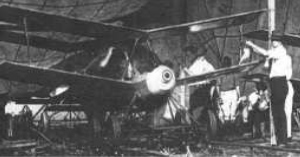
"The Kettering with a Wills/De Palma engine"
-The reason for the compound name Wills/De Palma is currently unknown. The engine has four visible V4 cylinders, is air-cooled, and produces 37 HP.
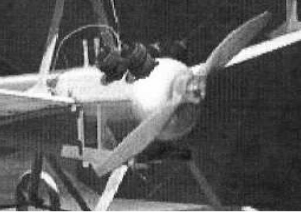
“The Bug's propulsion system”
-The tests were carried out between 1918 and 1920, some without steering and others using gyroscopes to stabilize the aircraft's direction.
-The device was, in fact, a flying bomb capable of reaching a distance of 80 km while carrying a 90 kg high explosive.
-Interestingly, to calculate the distance at which the device was dropped, the engine's revolutions were counted, stopping it at specific speeds that corresponded to the distance to be traveled.
-This system would be applied years later during WWII in the German V-1 Flying Bomb: a small propeller in the nose rotated as the device moved forward, with the number of revolutions corresponding to the distance traveled, cutting off the fuel supply and causing it to fall on the target.
-It is assumed that it would travel approximately that distance if it was small.
Engines of WILLS / DE PALMA
Model: 4-cyl. V, 37 HP
Arquitecture:
Cooling:
Total Displacement:
Bore / Stroke: x
Power:
Weight: