

Updated: 25-Oct-2025
It is the VOKBM or Voronezhskoyeo-ptyno-Konstruktorkoye Byuro Motorostroyeniya, located in the same city of Voronezh.
- It is currently the leading piston engine manufacturer in the Russian Federation, with roots in I.M. Vedeneev (Vedeneev), which already had the M-3 and M-14 as flagship products designed by Ivchenko.
- Bakanov succeeded Vedeneev in 1973.
- Ivchenko's AI-4 series engines are known. These engines have four horizontally-opposed cylinders, giving 55 hp at 4,500 rpm.
- They were built between 1948 and 1955, and were used on the Kamov Ka-10 helicopters.
- Also the M-5, M-6, M-7, and M-9.
-From the Bakanov period, the most notable are his horizontal, four-cylinder designs, such as the M-17, producing 175 hp at 2,950 rpm, manufactured between 1992 and 2000.
The M-17F version was a development with an injection system, reaching 200 hp.
On the M-17, the cylinders that appear to be horizontal and opposed are actually arranged in a horizontal X.
The Bakanov M-18-01, with 40 hp, and the -02 version, with 54 hp. Both were carbureted and supercharged.
Finally, the M-19 and VOKBM-29, giving 80 hp, were carbureted and had a reduction gear. There were few differences between the two models.
From Appendix 9: VOKBM or VMP (Voronezh Machine Plant). In the late 1930s and early 1940s, there was an attempt to build lightweight engines in Russia.
- Visits were made to the UK's De Havilland (Gipsy), the Prague-based Walter company, and the French Renault company. Finally, the French "Reno" (Renault) engines were chosen.
- There were certain significant difficulties in construction and performance, such as vibration, corrosion, malfunction at low temperatures (-15°C), etc. The main difficulty was the German invasion, which forced the entire production and machinery to move east to Kazan.
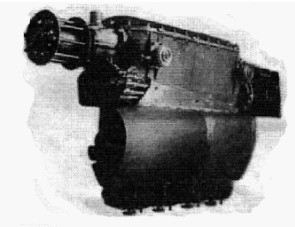
“CF-4 (MT-4)”
- The engines chosen from Renault were the inverted four-cylinder 4P model, later called the MT-4 or CF-4.
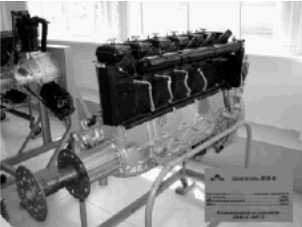
“CF-6 (MB-6), reversed”
-The 6Q “Bengali,” which would be renamed MB-6 or CF-6, and the 12-cylinder 12-cylinder, which would become the MV-12.
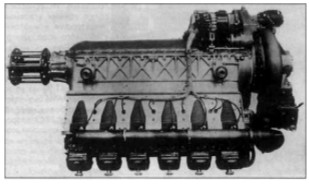
“12-cylinder (MV-12)”
-Since the aircraft they were intended for were Caudron models of Simoon, Typhoon, etc., they were already outdated and their performance was obsolete for the military aviation needs.
-Most of the built engines (about 100) were 4-cylinder, and it seems they were smelted to recover the aluminum so necessary at the time.
-It also seems that other aircraft waiting for these engines switched to the most common engine in Russia, the M-11.
-This engine was more reliable and easier to obtain, since it was produced by several factories.
- The company is also known as VMP or Voronezh Machine Plant,
- The new 450 hp M-9F (and FS) is announced.
- These are derivatives of the M-14P and M-14B with improvements such as fuel injection and a larger supercharger.
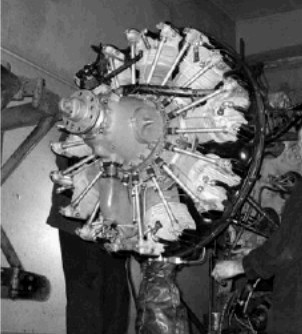
“Voronezh M-9F, 450 CV”
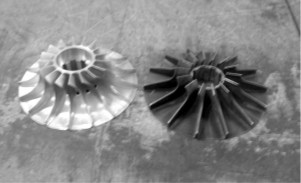
"M-9 left and M-14 right"
- This engine was created to meet the need for more power for the new Sukhoi Su-49 aerobatic aircraft.
Engines of VORONEZH
Model: 11D58M
Arquitecture:
Cooling:
Total Displacement:
Bore / Stroke: x
Power:
Weight:
Model: 17D12
Arquitecture:
Cooling:
Total Displacement:
Bore / Stroke: x
Power:
Weight:
Model: CF-12
Arquitecture:
Cooling:
Total Displacement:
Bore / Stroke: x
Power:
Weight:
Model: CF-4
Arquitecture:
Cooling:
Total Displacement:
Bore / Stroke: x
Power:
Weight:
Model: CF-6
Arquitecture:
Cooling:
Total Displacement:
Bore / Stroke: x
Power:
Weight:
Model: M-14
Arquitecture:
Cooling:
Total Displacement:
Bore / Stroke: x
Power:
Weight:
Model: M-17, -F
Arquitecture:
Cooling:
Total Displacement:
Bore / Stroke: x
Power:
Weight:
Model: M-18
Arquitecture:
Cooling:
Total Displacement:
Bore / Stroke: x
Power:
Weight:
Model: M-19
Arquitecture:
Cooling:
Total Displacement:
Bore / Stroke: x
Power:
Weight:
Model: M-3
Arquitecture:
Cooling:
Total Displacement:
Bore / Stroke: x
Power:
Weight:
Model: M-9F (base M-14P/R mejorado)
Arquitecture:
Cooling:
Total Displacement:
Bore / Stroke: x
Power:
Weight:
Model: MV-12
Arquitecture:
Cooling:
Total Displacement:
Bore / Stroke: x
Power:
Weight:
Model: RD-0110
Arquitecture:
Chambers:
Fuels:
Feed System:
Ignition:
Thrust:
Weight:
Model: RD-0120
Arquitecture:
Chambers:
Fuels:
Feed System:
Ignition:
Thrust:
Weight:
Model: RD-0124
Arquitecture:
Chambers:
Fuels:
Feed System:
Ignition:
Thrust:
Weight:
Model: RD-0255
Arquitecture:
Chambers:
Fuels:
Feed System:
Ignition:
Thrust:
Weight:
Model: RD-0410
Arquitecture:
Chambers:
Fuels:
Feed System:
Ignition:
Thrust:
Weight:
Model: Vokbm.29
Arquitecture:
Cooling:
Total Displacement:
Bore / Stroke: x
Power:
Weight: