

Updated: 24-May-2025
(Tumanskii sometimes).
OKB 300. Sergei Konstantin Tumansky was already known during WWII for installing turbochargers on piston aircraft engines used on MiGs and as a disciple of Mikulin.
-The M-85, M86, M-87 and M-88 radial engines are Tumansky's work (see M-).
-He was involved in the first entirely Soviet jet engine design, the AM-5, which he designed himself. As an extension of the design, the AM-9 was developed, intended for the MiG-19 and which in China would become the J-9 aircraft.
-The RD-9BF engine was the WP-6 in China.
-An engine with a thrust of approximately 3,300 kgf.
-In 1956, Tumansky succeeded Mikulin, and engines with the initials AM became RD.
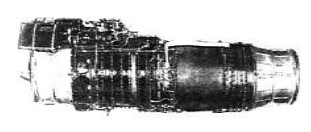
“Tumansky RD-9”
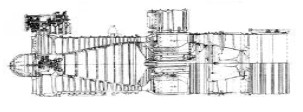
“RD-9B”
-The RD-9's most notable are the -A and -AK engines for the Yak-25 and -26.
-The -AF and -AF2 were engines with afterburners for the Yak-27 and -28.
-The RD-9B with afterburners for the early versions of the MiG-19 and the -9BF-811 for the later versions of the MiG-19.
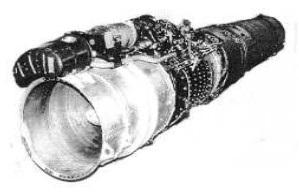
“RD-9F”
-The Tumansky R-11 engine first ran in 1959, with 3,900 kgf of dry thrust and 5,100 kgf with afterburner. (TRD-37)
-There were several versions of the R-11, such as the V-300, the first high-altitude version without afterburners.
-The F-300s were fitted on the early MiG-21s and the improved AF-300 on the new YaK-28s.
-The R-11-AF300, -F2-300, -AF2-300, and -F2S-300 engines on subsequent versions of the MiG-21 and YaK-28.
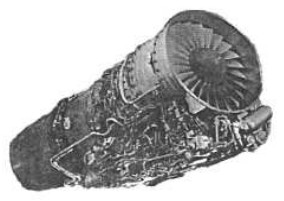
“R-11”
-The F variants have been built in India by HAL and in China by Chengdu as the WP-7 (Wo-Pen 7).
-The R-13 is a major redesign of the R-11, with 5,100/6,600 kgf of thrust.
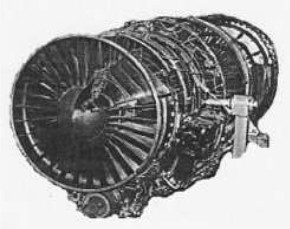
“R-15, cutaway”
- The R-15, R-15BD-300 versions are fitted on the MiG-25R, an engine closely related to its R-31 derivative, went to the MiG-31.
- The Tumansky R-195 is a simplification of the R-13 and was originally designated the R-95, intended for the Sukhoi Su-25 and Su-28 families.
- This engine was designed to withstand impacts from ammunition up to 23 mm.
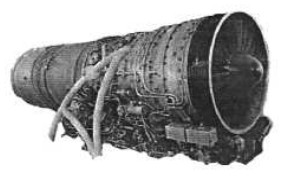
“Tumansky R-195”
- The RU-19 were small engines for use in RPVs, as takeoff aids for transport aircraft, and as APUs.
- The R-25 was a more advanced engine, interchangeable with the R-13 to modernize aircraft that used it. It was installed on the MiG-21, although it has been discontinued long ago. HAL of India maintains it for its aircraft.
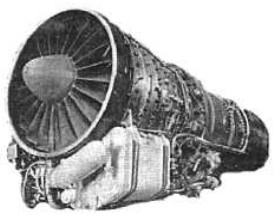
“Tumansky, R-25” (PiP)
The R-26 engine family powers some versions of the MiG-25 and has an operating capacity of up to Mach 3.3.
They were on the order of 10 tons of thrust.
The Tumansky R-27 was an engine based on the R-25 but with vectored thrust in the case of the R-27V. The basic R-27 was intended for the MiG-23.
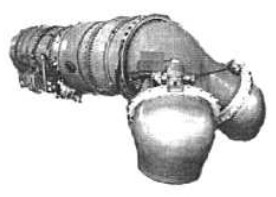
“Tumansky R-27V”
The MiG-27 uses the Tumansky R-29, as does the Su-22. Some MiG-23s used the R-29B.
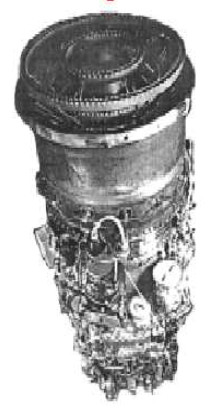
“Tumansky R-29B” (PeT)
-The MiG-23's R-29 is shown in the following diagram.
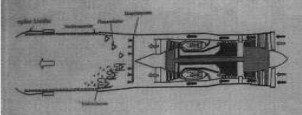
“R-29, with afterburner”
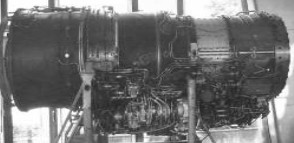
“R-29 core, at the Munich Museum”
-The R-31 is also the R-266, because it was originally known as the R-26 subtype 6.
-It was initially installed on the MiG-25 and, from the -D, onwards, on the MiG-31.
-In the early 1990s, the R-35 was announced, perhaps using concepts from the R-29.
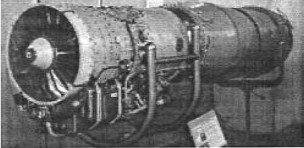
“Tumansky R-35”
-This was one of the first images offered of this engine.
-Tumansky is now a JSC or Joint Stock Company.
-Its engines are now built primarily by Soyuz.
From Appendix 6: Turbojets designed by Sergei Konstantinovich Tumanskiy and currently built at Soyuz.
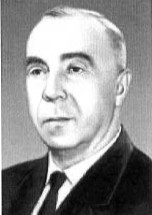
“S.K. Tumansky”
-Tumansky was a pioneer of operational turbine engines for the Russian Air Force. Starting with the RD-6, RD-9, RD-10, and RD-11.
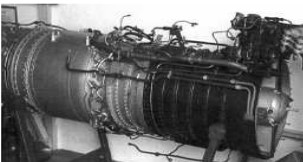
“RD-9B engine of the I-350M”
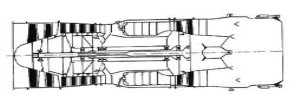
“R-11F-300”
-The R-11 engine used on the MiG-19 evolved with “F” or Afterburner, etc.
-In fact, Russian engines have endured for a long time due to the philosophy of "why would you change what works well," and they all evolve and modernize.
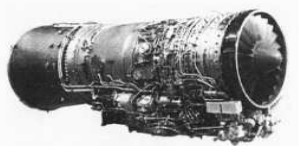
“R-13F-300”
-The R-13 was a derivative of the R-11 and is used on the MiG-21. More recently, on the MiG-21MF and UM.
-It is followed by the R-15, R-19, RU-19, RD-20, R-25, and R-26.
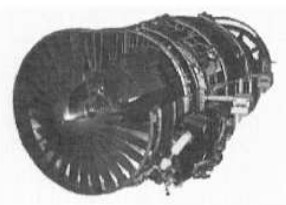
“R-15”
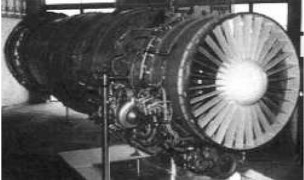
“R-15B-300”
-There is constant cross-design from one manufacturer to another due to the Russian manufacturing system: One office designs, another company fine-tunes, and several companies participate in the construction.
-But engines from one office are also collected by another and modernized or improved. There is—or was—a great deal of collaboration.
-This leads to a crisscrossing of references that are difficult to trace as to who created each engine model. However, efforts are being made to discover the genuine one, the first one.
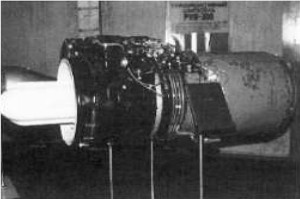
“RU-19-300 (sometimes referred to as KR7-300)”
-The R-27 has a "V" version with a directional bifurcated nozzle for vertical takeoff of the Yak-36M. (R-27V-300 engine).
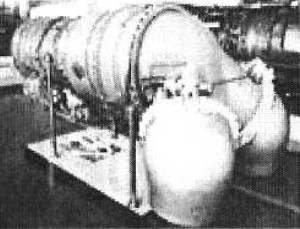
"R-27V-300 nozzles pointing downward"
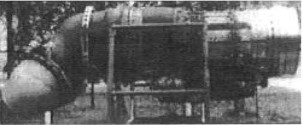
"R-27V-300, with semi-rearward-facing nozzles"
-Other Tumansky engines were the R-29, R-31, R-35, and RD-500. See the main text of the chapters on Tumansky and Soyuz.
-As noted in the Khachaturov chapter, the two collaborated on the design and construction of the R-29, R-29B, and R-35.
From Appendix 9: An interesting Tumansky RD-9, largely in section, is on display at the Hugo Junkers Technik-Museum in Dessau, Germany.
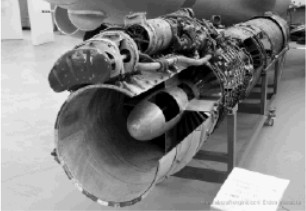
“The Educational RD-9” (E.V.)
-It is possible that in a future reissue of this publication, this photograph will replace the less clear one in the main text.
-Another Tumansky R-11-F, although without the afterburner (only the injectors and the flame-maintaining grill are visible).
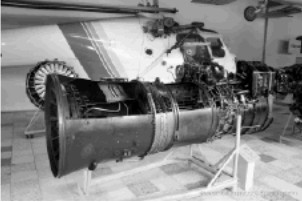
“Tumansky R-11-F” (E.V.)
-This R-11-F is at the Flugausstellung L+P Junior in Hermskeil.
-In retrospect. The M-85 model is only mentioned, but no illustration appears in the main text.
- Now thanks to Evzen from the AEHS, who located an M-85 in the Finnish museum in Tikkakoski and photographed it.
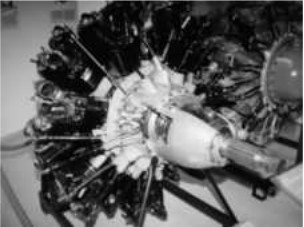
“A Tumansky M-85” (Photo E-V)
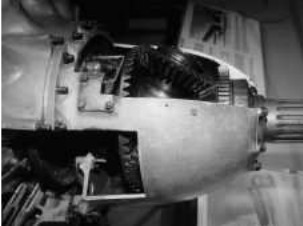
“Detail of the epicyclic gearbox”
-The M-88 is also a Tumansky.
Engines of TUMANSKY
Model: 11D78, 11D79
Arquitecture:
Compressor/s:
Combustion chambers:
Turbines:
Power / Thrust: / ---
Weight:
Model: 210A / 210B
Arquitecture:
Compressor/s:
Combustion chambers:
Turbines:
Power / Thrust: / ---
Weight:
Model: M-85
Arquitecture:
Cooling:
Total Displacement:
Bore / Stroke: x
Power:
Weight:
Model: M-87
Arquitecture:
Cooling:
Total Displacement:
Bore / Stroke: x
Power:
Weight:
Model: M-88
Arquitecture:
Cooling:
Total Displacement:
Bore / Stroke: x
Power:
Weight:
Model: R-11, -F
Arquitecture:
Compressor/s:
Combustion chambers:
Turbines:
Power / Thrust: / ---
Weight:
Model: R-13
Arquitecture:
Compressor/s:
Combustion chambers:
Turbines:
Power / Thrust: / ---
Weight:
Model: R-15
Arquitecture:
Compressor/s:
Combustion chambers:
Turbines:
Power / Thrust: / ---
Weight:
Model: R-19
Arquitecture:
Compressor/s:
Combustion chambers:
Turbines:
Power / Thrust: / ---
Weight:
Model: R-195
Arquitecture:
Compressor/s:
Combustion chambers:
Turbines:
Power / Thrust: / ---
Weight:
Model: R-25
Arquitecture:
Compressor/s:
Combustion chambers:
Turbines:
Power / Thrust: / ---
Weight:
Model: R-26
Arquitecture:
Compressor/s:
Combustion chambers:
Turbines:
Power / Thrust: / ---
Weight:
Model: R-266
Arquitecture:
Compressor/s:
Combustion chambers:
Turbines:
Power / Thrust: / ---
Weight:
Model: R-27, -V
Arquitecture:
Compressor/s:
Combustion chambers:
Turbines:
Power / Thrust: / ---
Weight:
Model: R-29
Arquitecture:
Compressor/s:
Combustion chambers:
Turbines:
Power / Thrust: / ---
Weight:
Model: R-31
Arquitecture:
Compressor/s:
Combustion chambers:
Turbines:
Power / Thrust: / ---
Weight:
Model: R-35
Arquitecture:
Compressor/s:
Combustion chambers:
Turbines:
Power / Thrust: / ---
Weight:
Model: R-95
Arquitecture:
Compressor/s:
Combustion chambers:
Turbines:
Power / Thrust: / ---
Weight:
Model: R201-300
Arquitecture:
Compressor/s:
Combustion chambers:
Turbines:
Power / Thrust: / ---
Weight:
Model: R203-300
Arquitecture:
Compressor/s:
Combustion chambers:
Turbines:
Power / Thrust: / ---
Weight:
Model: R204-300
Arquitecture:
Compressor/s:
Combustion chambers:
Turbines:
Power / Thrust: / ---
Weight:
Model: R209-300
Arquitecture:
Compressor/s:
Combustion chambers:
Turbines:
Power / Thrust: / ---
Weight:
Model: R210E-300, R210D-300
Arquitecture:
Compressor/s:
Combustion chambers:
Turbines:
Power / Thrust: / ---
Weight:
Model: RD-10
Arquitecture:
Compressor/s:
Combustion chambers:
Turbines:
Power / Thrust: / ---
Weight:
Model: RD-11
Arquitecture:
Compressor/s:
Combustion chambers:
Turbines:
Power / Thrust: / ---
Weight:
Model: RD-20
Arquitecture:
Compressor/s:
Combustion chambers:
Turbines:
Power / Thrust: / ---
Weight:
Model: RD-500
Arquitecture:
Compressor/s:
Combustion chambers:
Turbines:
Power / Thrust: / ---
Weight:
Model: RD-6
Arquitecture:
Compressor/s:
Combustion chambers:
Turbines:
Power / Thrust: / ---
Weight:
Model: RD-9
Arquitecture:
Compressor/s:
Combustion chambers:
Turbines:
Power / Thrust: / ---
Weight:
Model: RU-19
Arquitecture:
Compressor/s:
Combustion chambers:
Turbines:
Power / Thrust: / ---
Weight: