

Updated: 18-May-2020
Sometimes mentioned as a "Langley" engine. It was actually a Manly.
-Samuel Pierpoint Langley was a precursor of aviation and already in 1896 he tried out his “Aerodrome” on the Potomac River, lacking power for such a machine, going directly to the water.
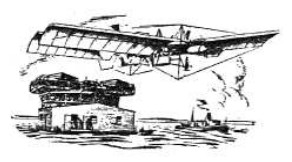
“The Aerodrome”
-Optimistic representation of the Aerodrome flight attempt.
-It really collapsed right in front of the floating structure.
From Appendix 6: Samuel P. Langley, an American aviation pioneer, has been located in the NASM files with the steam engine that was used on the Aerodrome No 5 in 1896.
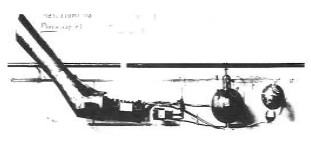
“Steam engine components”
-On the Aerodrome A of 1903 used the Manly (Langley-Manly) engine (see Manly) that gave 52 HP at 950 rpm, weighing 135 pounds.
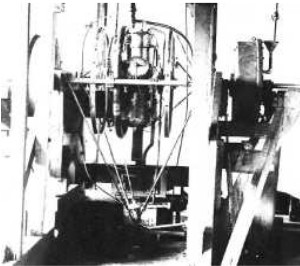
“Langley-Manly engine on test bench”
-The Aerodrome A engine was rotary radial engine with 5 cylinders that was protected between wheels.
Engines of LANGLEY
Model: Motor vapor para el Aerodrome 5
Arquitecture: de 5 cilindros
Total Displacement:
Bore / Stroke:
Boiler Pressure:
Power: 52 HP @ 950 rpm
Weight: 135 Lb
Rotary engine
"Langley-Manly engine on a test bench"