

Updated: 11-Nov-2024
It was the “The Cosmos Engineering Co. Ltd.” construction company, but previously it was a section of the “Brazil, Stacker & Co.”, a car manufacturer.
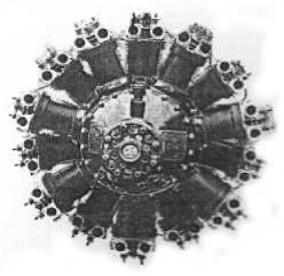
“The Cosmos Mercury”
-It studied, designed, built and tested two important engines, the Mercury and the Jupiter, which would eventually be passed on to Bristol.
-The Mercury, a 14-cylinder, double-row radial, only gave 300/315 HP.
-As a notable feature, this engine did not use “mother” connecting rods, but the crankshaft neck was longer with the connecting rods placed next to each other, and the cylinders mounted in a spiral.
-While the Jupiter with only nine cylinders reached 500 HP, naturally due to its larger overall diameter and the size of its cylinders.
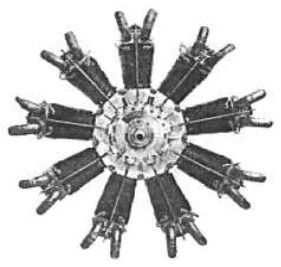
“The Cosmos Jupiter”
Engines of THE COSMOS
Model: Jupiter
Arquitecture:
Cooling:
Total Displacement:
Bore / Stroke: x
Power:
Weight:
Model: Mercury
Arquitecture:
Cooling:
Total Displacement:
Bore / Stroke: x
Power:
Weight: